


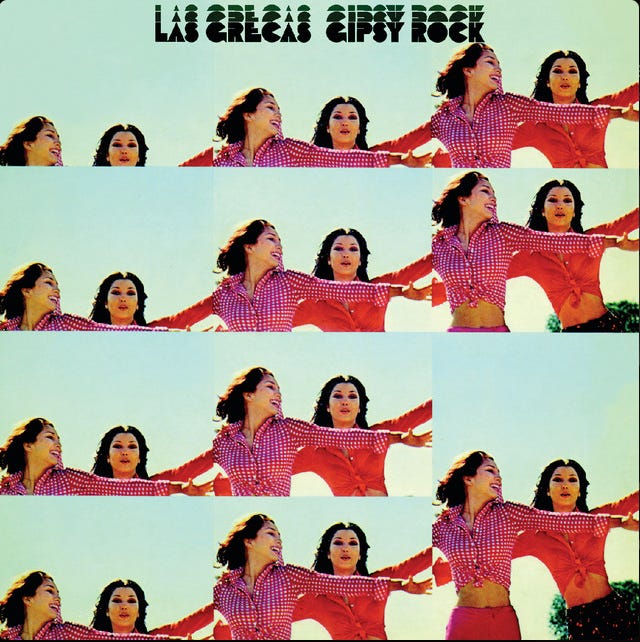
As the supreme flamenco rock band Pata Nega said in their Andalucían blues classic “Pasa la vida,” “life passes and you don’t realize that you’ve lived it.” That is not necessarily a negative statement. It can be an inspirational one. When it’s hot, Spain summer hot, like it’s been extremely so this week, it’s a good time to sit and watch life pass by. Ideally sitting outside in an uncrowded public place late at night, with people you know or don’t, listening to a guitar and maybe a song about life passing by.
For me, summer time is always flamenco time. We don’t have air conditioning. I don’t need much sleep. It’s a good time to listen, and live, be with someone you love and think about life from another angle.
“Pasa la vida, igual que pasa la corriente
Cuando el río busca el mar”
“Life passes by, just like the current passes
When the river looks for the sea”
“Pasa la Vida” by Pata Negra
Today I’m listening to some of my favorite flamenco rockeros, from yesterday and today. Songs of struggle. Songs of love. Songs of life.
It’s too hot to think.
Here’s a playlist:
On Qobuz:

To’ el dia en la calle, en la plazuela tomando el aire soy un bohemio de la vida
All day in the street, in the plaza getting some air, I’m a bohemian of life
From “El Aire de la Calle” by Los Delincuentes
On Spotify:

“Without emigration the world has no meaning or color.” Sevillan “flamenco billy” group Los Martíres de Compás
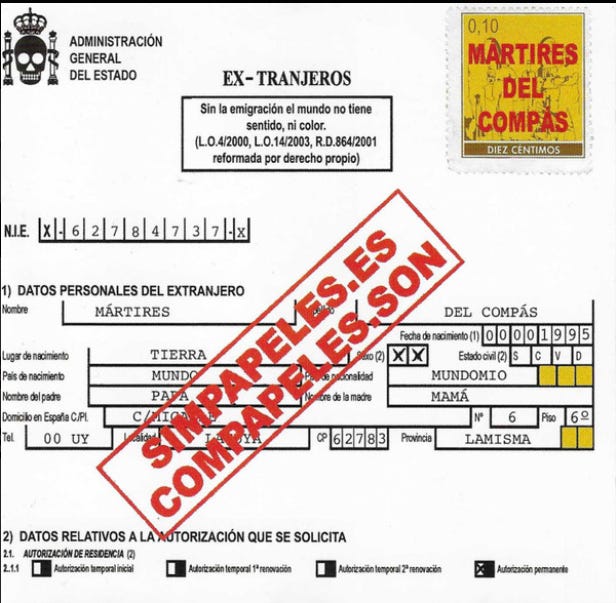
Martires del Compás, one of my favorites. I actually spent an evening with them once sitting outside a bar on a hot night in Sevilla. Life passed by.
More flamenco:
Flamenco on Film: My Favorite Movies About the "Delirious" Spanish Art

Flamenco is by nature an enigma. Its origin is impossible to pinpoint, its attraction visceral. "Flamenco defies logic,” says the singer Niño de Elche, who approaches flamenco with a deliberately surrealist flair, as seen in the 2022 film Canto Cósmico,
Jerónimo Villarino, Hollywood’s Forgotten Flamenco Star

Flamenco guitarist Jerónimo Villarino was described as “the man of the hour in Hollywood” in the spring of 1948, when he gave an interview to entertainment journalist Elena de la Torre from the Cine-Mundial, the Spanish language edition of Moving Picture World
The Spanish Hour: When Artists and Composers Created the Image of Spain

Spain was all the rage in Paris as the 19th century turned to the 20th. While France was represented by the new Eiffel Tower, a symbol of progress, modernity, and industry, Parisians embraced with fervor - and also some condescension - the image of Spain as a country of flamenco and bullfighting.
Te estoy amando locamente.
Qué portada!